

Orvieto history runs from an Etruscan settlement that flourished between the 6th and 4th centuries BC to a medieval commune that reached its greatest expansion in the 13th and 14th centuries. Set on a tufa plateau, the city brings those periods together in its archaeological collections, cathedral and surviving urban fabric.
- Setting: A natural tufa plateau about 150 metres above the surrounding plain.
- Early history: The earliest traces date to the 9th century BC.
- Medieval turning point: Orvieto became a free commune in 1137.
- Historic landmark: Construction of the cathedral began at the end of the 13th century.
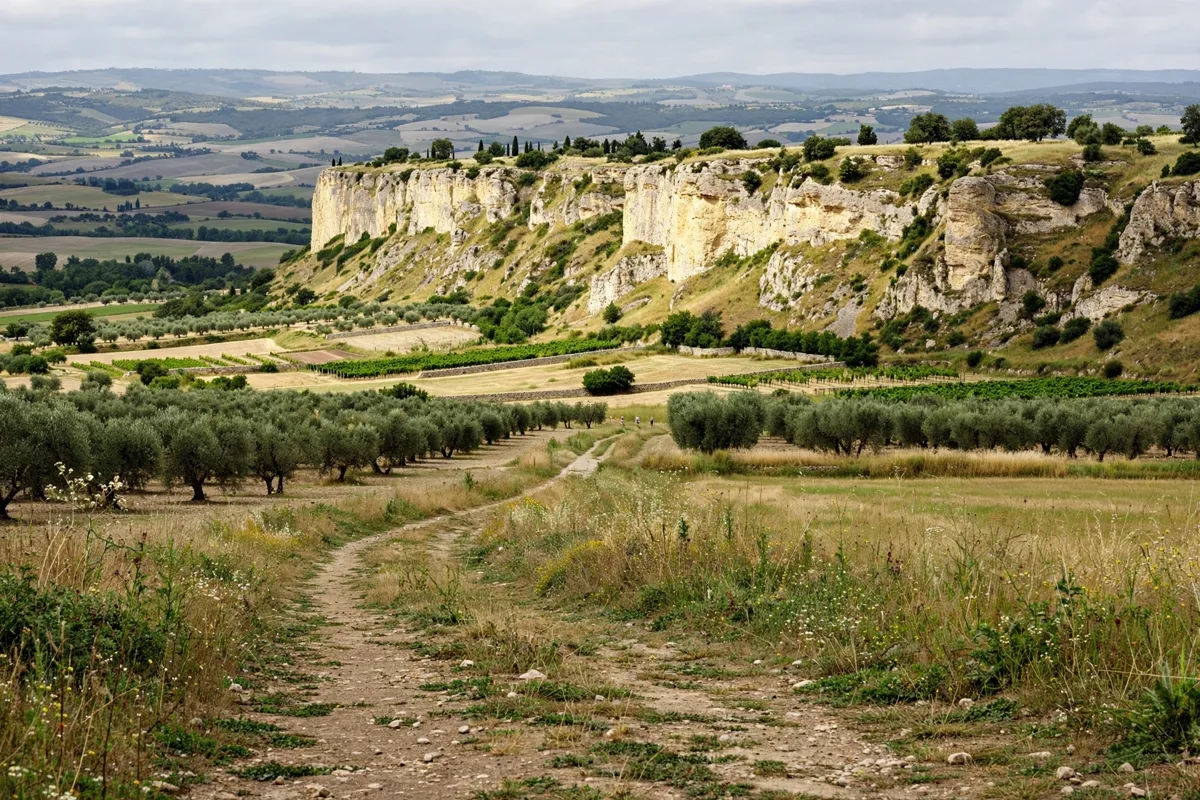
Orvieto before the medieval period
Orvieto’s early history begins with traces dating to the 9th century BC, followed by an Etruscan settlement that grew to prominence centuries later. The city’s elevated position on a natural tufa plateau, about 150 metres above the surrounding plain, is a defining feature of its setting.
The settlement reached its peak between the 6th and 4th centuries BC, then declined in Roman times. That sequence gives you a useful frame for reading the archaeological remains: Etruscan Orvieto was a major phase in the city’s story, but it was not the last one.
After the Roman-era decline, a new settlement developed on the cliff around the year 1000. Orvieto’s medieval rise followed, eventually reshaping the plateau into the city described in later records.
What can you see of Orvieto’s Etruscan past?
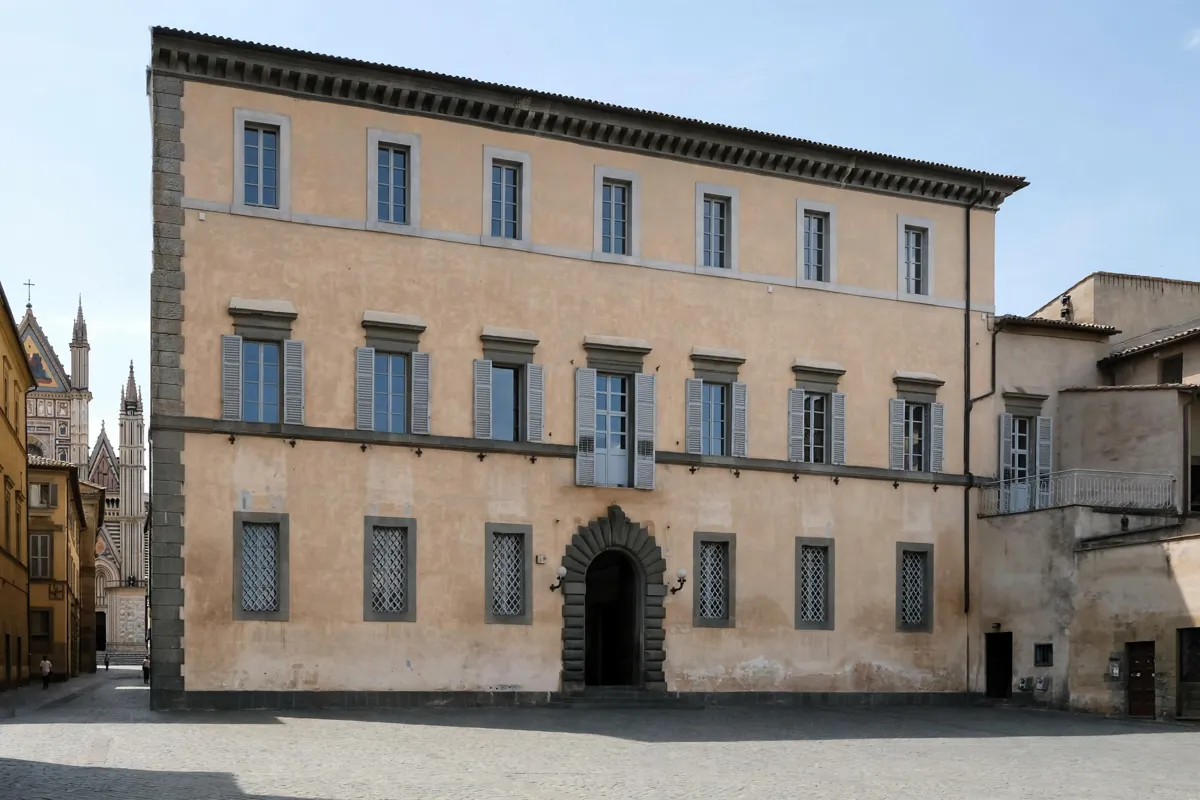
Orvieto’s Etruscan past is most directly explored through its archaeological museums and underground remains. The Claudio Faina and Civic Archaeological Museums are housed in Palazzo Faina on Piazza Duomo, where collections connect visitors with the city’s earlier history.
The Palazzo Faina building was constructed in the mid-19th century using structures from the Monaldeschi family’s house, and it became a museum in 1954.
The Claudio Faina Etruscan Museum and the Civic Archaeological Museum are both there, making the piazza a practical place to begin with archaeological collections; the Museo archeologico nazionale di Orvieto is another place to explore the city’s archaeological story.
Orvieto’s underground network offers a different perspective. Caves, wells and tunnels cut into the tufa are associated with the city’s Etruscan origins.
The caves, wells and tunnels of Orvieto Underground form the focus of this guide to planning an underground visit.
How did Orvieto become a medieval city?
Orvieto became a free commune in 1137, marking a key step in its medieval civic history. Its status was formally recognised that year and confirmed by an official act in 1157.
The city reached its maximum expansion in the 13th and 14th centuries. Its urban structure has remained basically unchanged since that period, so the historic centre still reflects the shape of the medieval city.
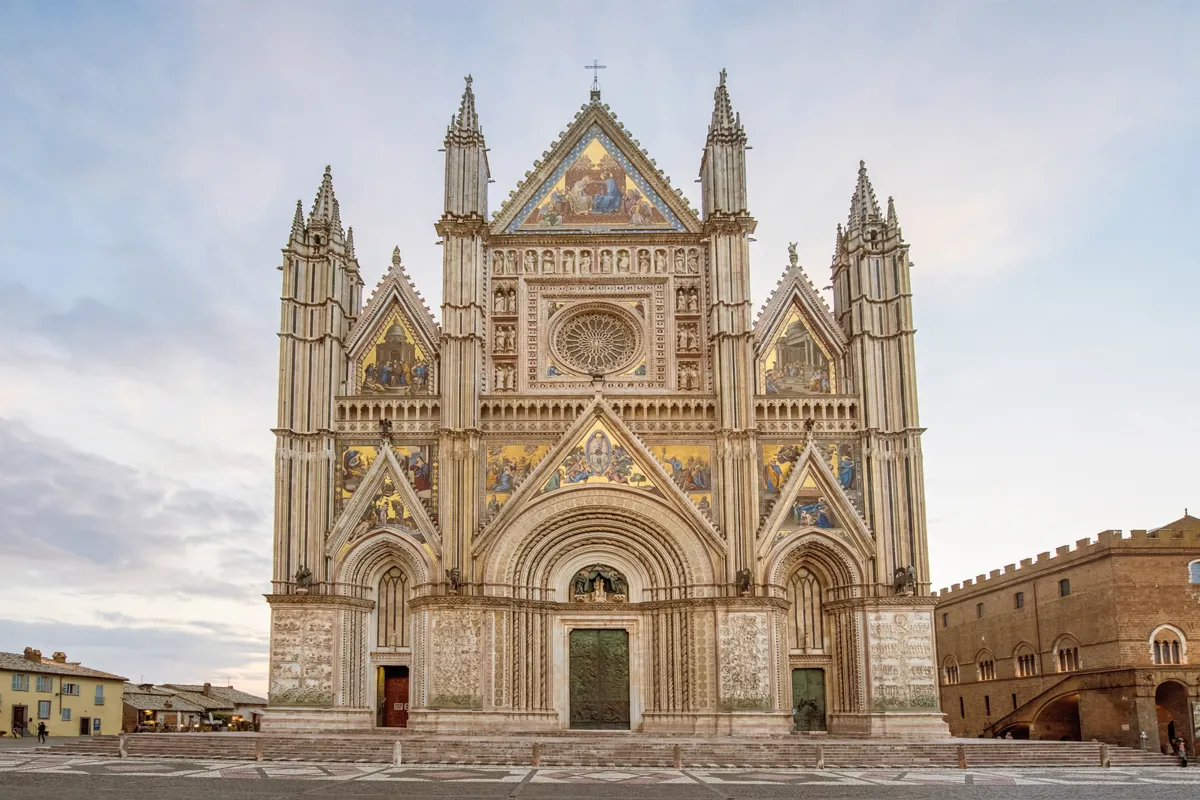
The cathedral is one of the clearest landmarks from this period. Construction began at the end of the 13th century and continued through the first half of the 14th century.
Dedicated to Santa Maria Assunta in Cielo, it is known for its golden façade mosaics and rose window, attributed to Andrea di Cione (Orcagna) and dated about 1354. Inside, Luca Signorelli’s Last Judgment frescoes connect the building to the city’s artistic history.
The cathedral and its surrounding streets make a natural starting point for understanding the historic centre, whose streets and landmarks are covered in this guide to Orvieto’s old town.
Where can you see Orvieto’s history?
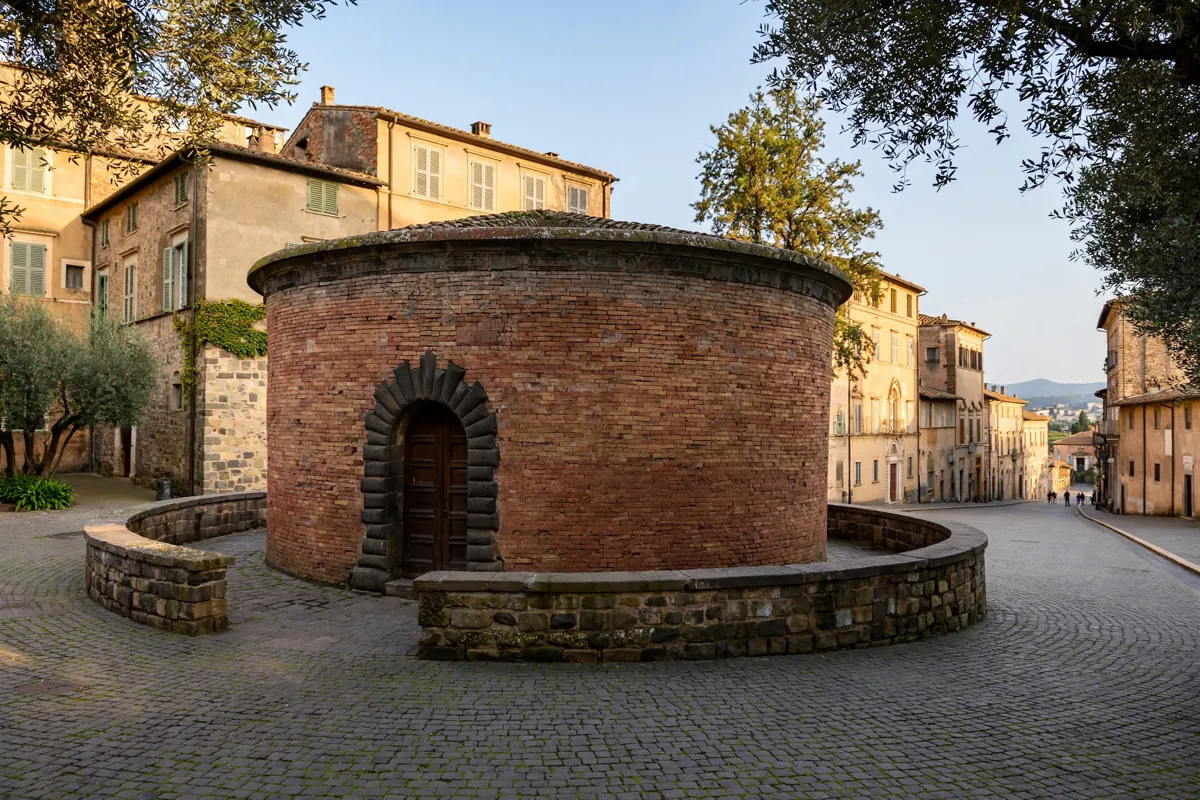
You can follow Orvieto’s history across its archaeological museums, cathedral, underground spaces and historic well. These sites represent different periods, so a visit to more than one can help connect the Etruscan, medieval and later chapters.
At the cathedral, look for the golden façade mosaics, the rose window and Signorelli’s frescoes. The Municipality says the building has access and routes for visitors with disabilities; contact the ticket office if you have specific needs. Tourist visits are not allowed during liturgical services.
The Claudio Faina and Civic Archaeological Museums bring archaeological collections together in Palazzo Faina on Piazza Duomo. For a later landmark, Pozzo di San Patrizio was commissioned by Pope Clement VII, who had taken refuge in Orvieto during the 1527 Sack of Rome. Antonio da Sangallo the Younger designed the well, completed in 1537.
The well is 62 metres deep and 13 metres wide. Two separate spiral staircases, each with 248 steps, descend to a small bridge at the bottom that connects them. Its position in central Orvieto is also described as panoramic.
A practical order for history-focused visits
A history-focused visit can begin with the archaeological museums, continue at the cathedral and finish with an underground site or historic well. This order moves from the city’s earlier archaeological story to its medieval civic landmarks and later engineering.
- Start at Palazzo Faina for the Claudio Faina and Civic Archaeological Museums on Piazza Duomo.
- Continue to the cathedral to see its façade and explore its artistic history.
- Add an underground visit to encounter caves, wells and tunnels in the tufa, or visit Pozzo di San Patrizio for its twin staircases.
The museums are open daily from 09:30–18:00 from 1 April to 30 September and 10:00–17:00 from 1 October to 31 March; no booking is required.
The Cathedral ticket costs €11, with free admission for children up to and including age 10, visitors with disabilities and their accompanying persons with appropriate certification, among other categories. Opening hours and ticket arrangements can change, so check the official site before you go.
From Hotel Kristall rooms in Orvieto, the cathedral is about 13 minutes by car. The hotel is a three-star base for a visit focused on the city’s historic centre.
FAQs
When did Orvieto become a free commune?
Orvieto became a free commune in 1137, and an official act confirmed that status in 1157.
When did Orvieto’s Etruscan settlement reach its peak?
The settlement reached its peak between the 6th and 4th centuries BC, before declining in Roman times.
How many steps are in Pozzo di San Patrizio?
Each of its two separate spiral staircases has 248 steps. A small bridge at the bottom connects the staircases.